Mirage, déjà vu
Performance and music release (2019–2021)
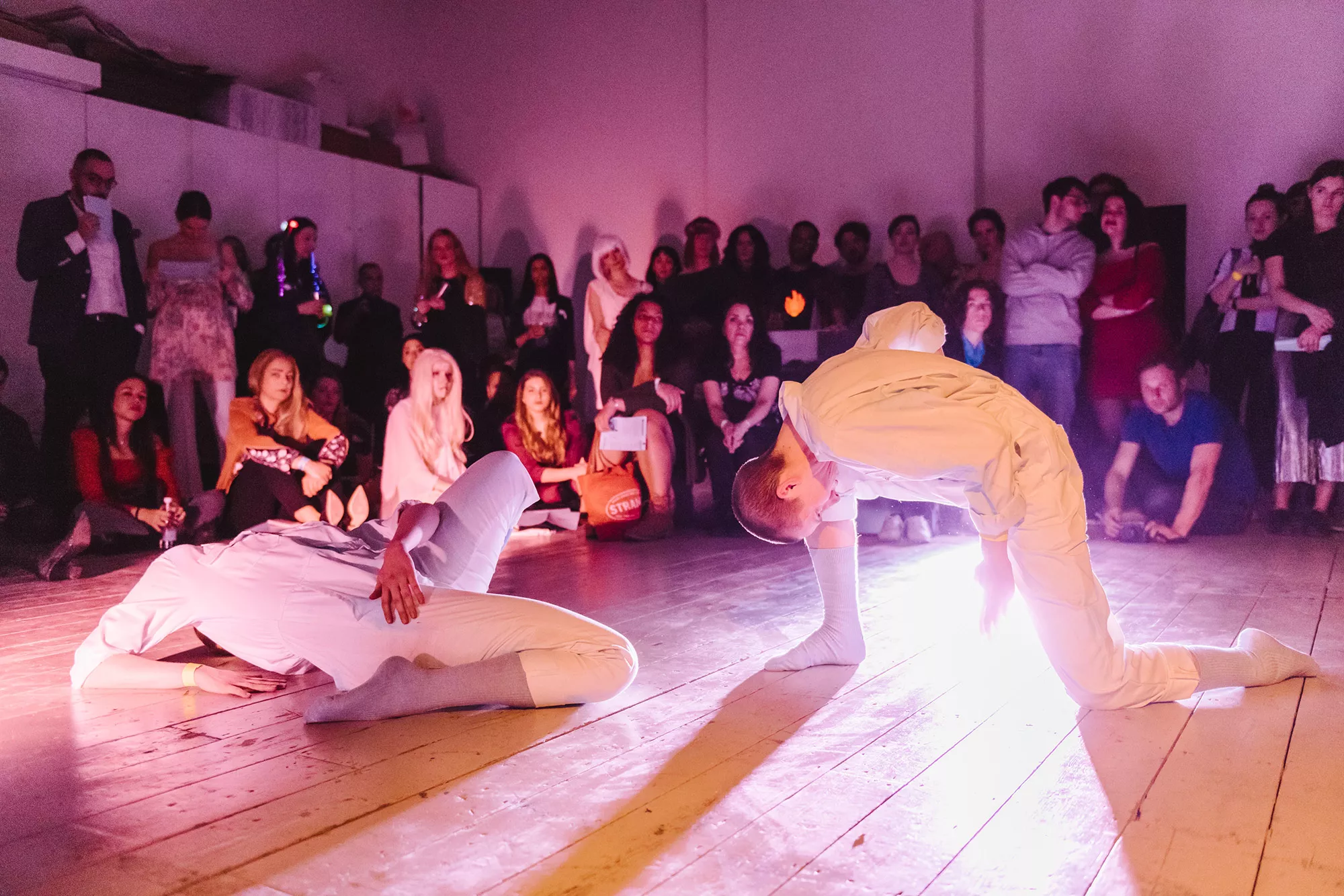
Perfomance in collaboration with Jules Cunningham and Nik Void
The Royal Academy of Arts London
For several years, artist Gaia Fugazza has been compiling interviews with ultrarunners – athletes who compete in races that last several days and nights – about the hallucinatory visions and altered states of consciousness that spontaneously arise in the course of such feats of physical exertion. These states can be caused by exhaustion and low blood sugar, but isolation, lack of communication and immersion in nature also play a role. Although considered an ‘extreme’ sport, ultrarunners usually have other careers and often come to this discipline later in life. All genders have an equal chance of success, and the training is psychological as much as physical, focusing on the management of isolation, loneliness and fear, and knowledge of one’s limits.
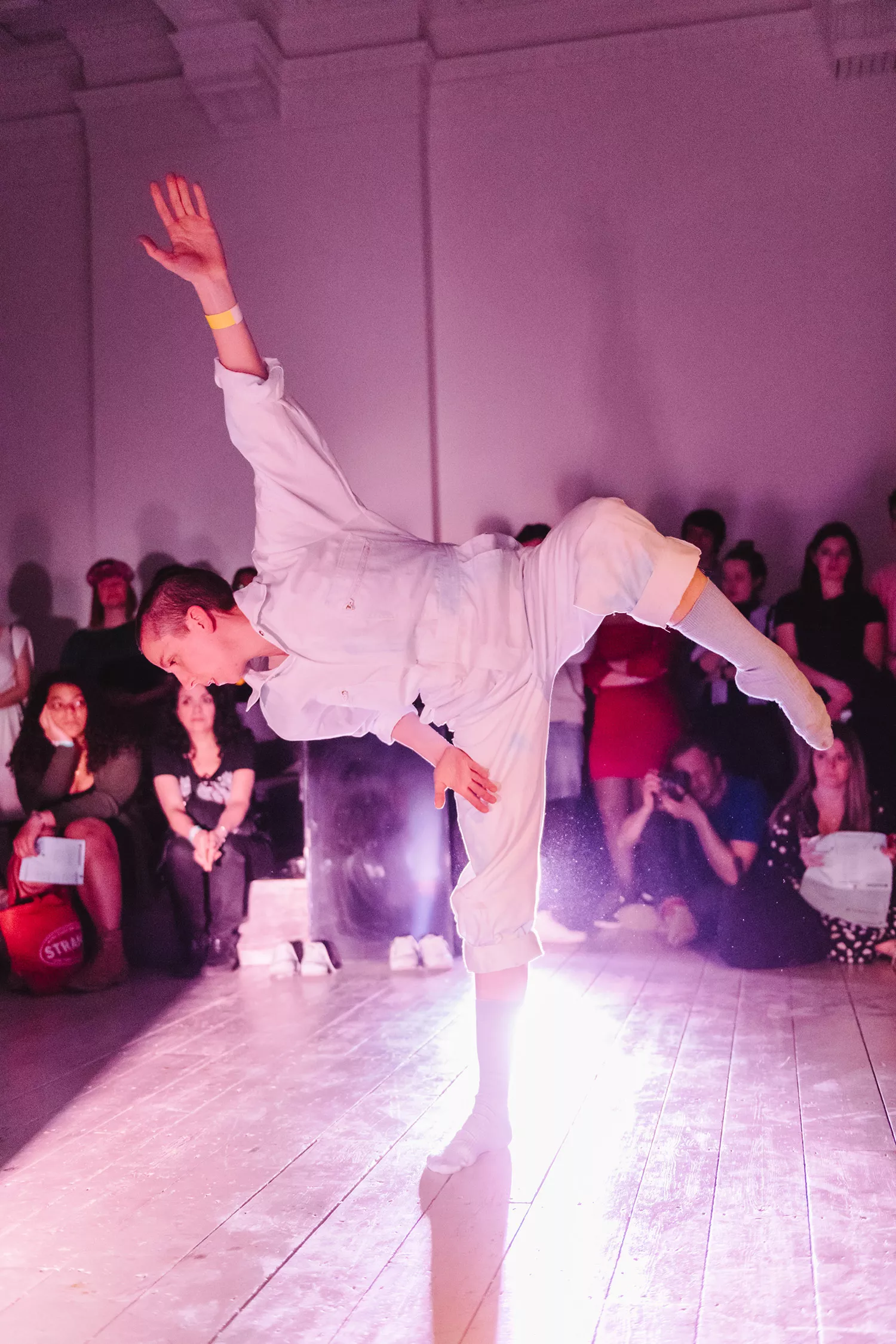
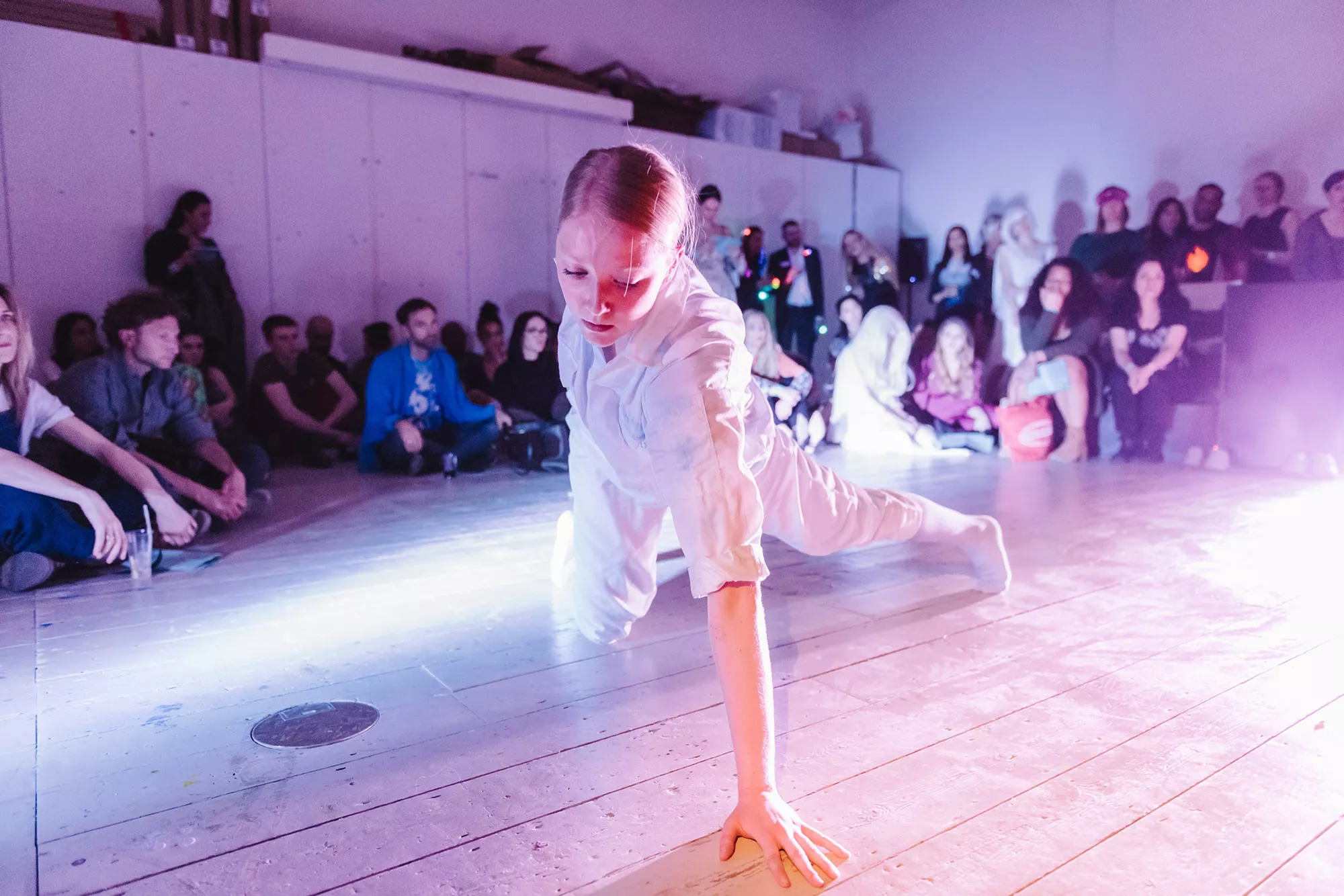
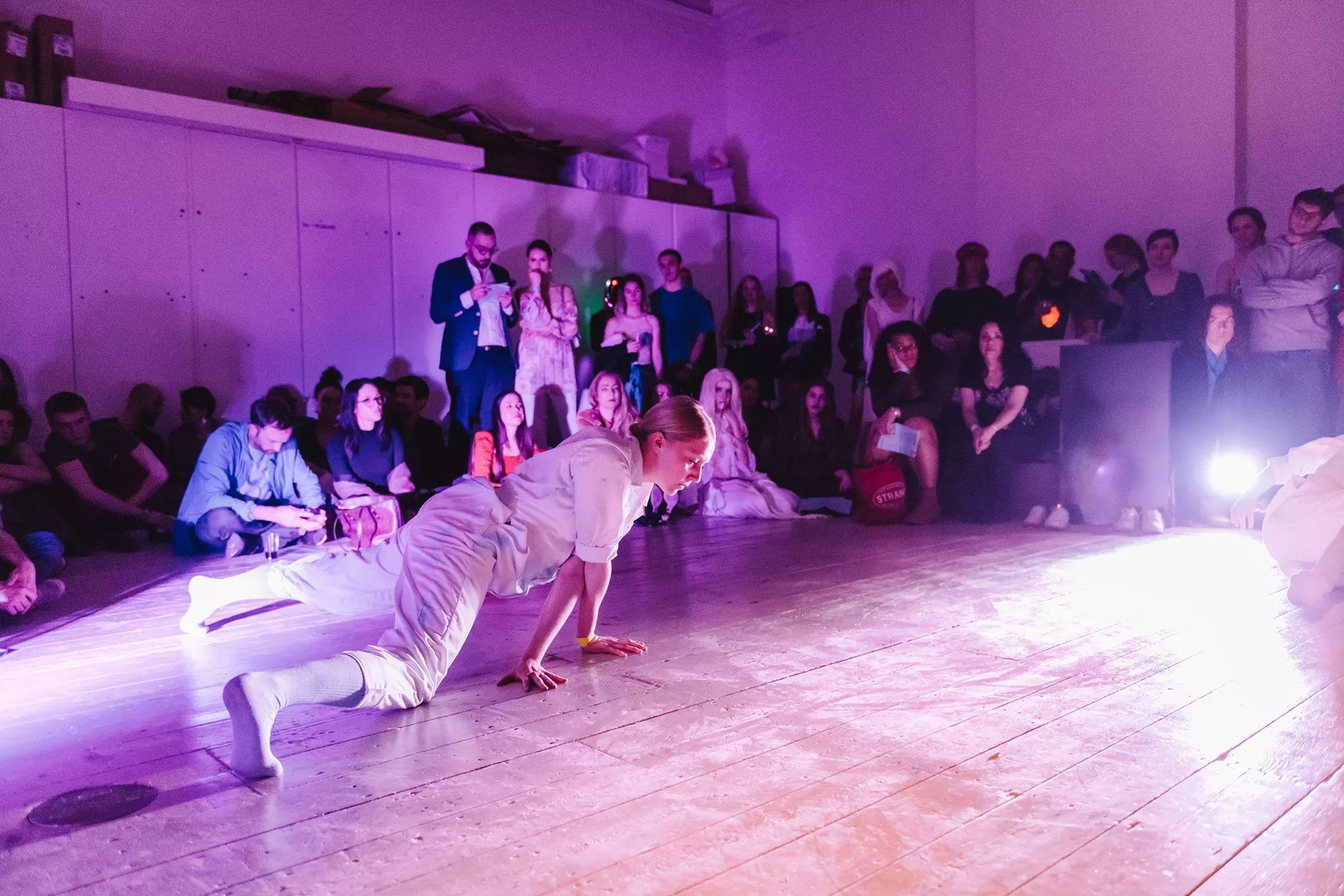
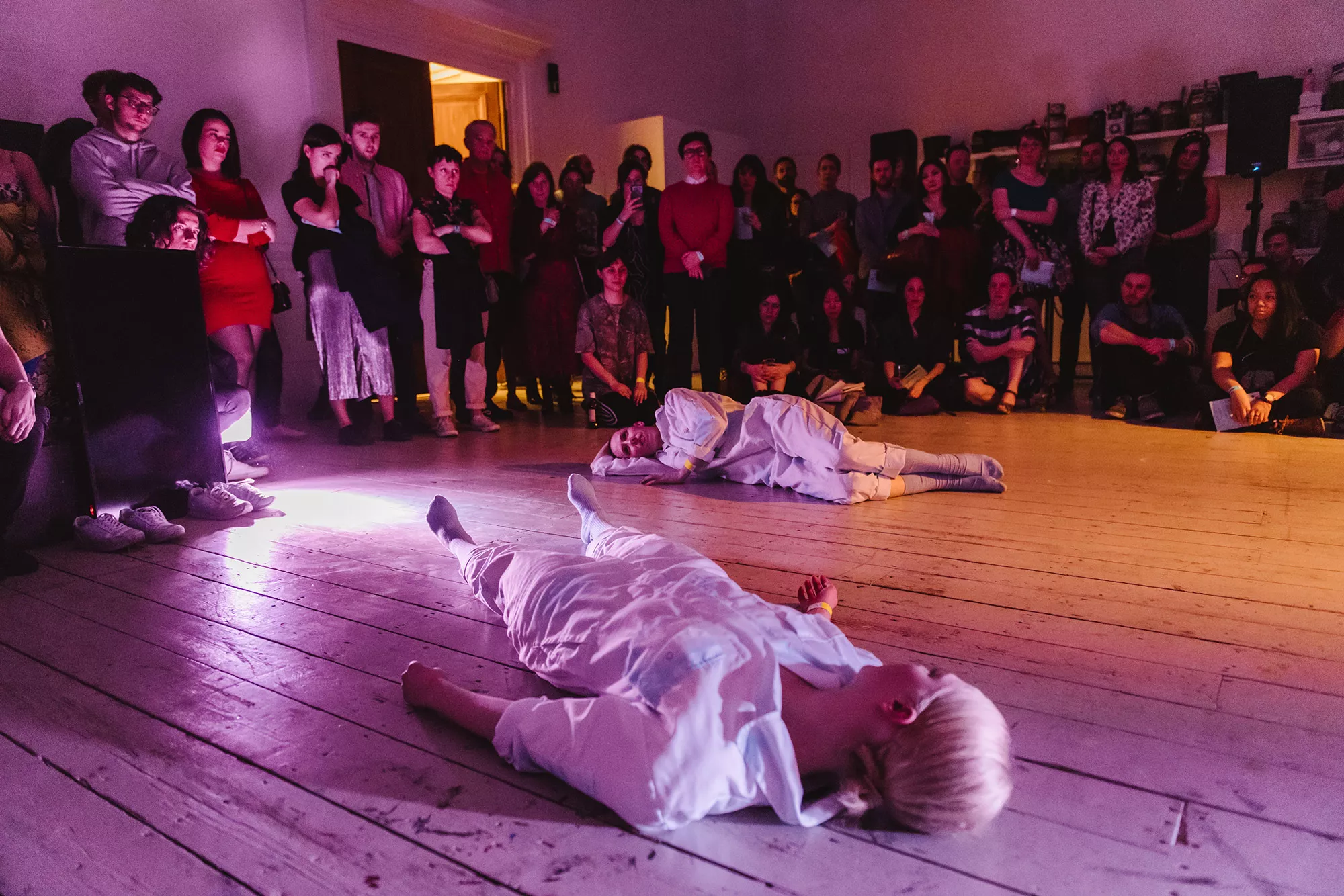
Back in March 2019, Fugazza was editing her interview with ultrarunner Johan Steene into a monologue, for use in a performance at the Royal Academy of Arts in London. A conversation with musician Nik Void gave rise to the idea of turning the work into a sound piece. In that occasion Jules Cunningham created a choreography to accompany the sound and performed it.
Steene, one of the world’s leading ultrarunners, describes learning to observe and categorize the hallucinations in order to control them. In this way, he was able to tolerate and eventually ‘co-habit’ with the more troubling visions, even identifying useful clues from them, such as those signalling that he needed to rest. He also reflects on the extraordinarily level of detail that these images have, seemingly produced only when his body and mind were pushed to their extreme limits.
A second live iteration of the piece was performed at Gallleria Più in Bologna in September 2019, with additional interview material from another ultrarunner, Mauro Prosperi. Prosperi is an Italian former policeman who became lost for 9 days in the Sahara Desert while participating in the 1994 ‘Marathon des Sables’. Rather than conjuring psychedelic visions, his consciousness tapped into “a library of human knowledge on survival techniques’ ‘, accessible only through fatigue and isolation in nature. He describes the routines he devised to keep himself sane during the time alone, such as discipline, keeping clean and adopting rituals to mark the day.
It’s remarkable that many of the ‘antidotes’ that the runners used to dispel the hallucinations – such as talking, making phone calls, reading, eating and sleeping regularly – are activities that are firmly rooted in the everyday routines of most people. It suggests a question: do the rituals of daily life serve to somehow protect us from the wider landscape of our own imaginations?
Nik Void created the sound for the compositions from modular synthesis, voice, guitar and piano. The resulting music music aims to reflect both the tough ‘survival’ instincts as well as the more mystical mindsets that arise when the body taps into its reserves. In a year-long process, she continually reworked and reprocessed, recreating the sense of blurred time and a distorted, fragmentary sense of reality that the ultrarunners experience over the course of a race.
Listen on Spotify:
Mirage, Déjà Vu, then a parallel life, 2019
https://open.spotify.com/track/6Uijeh6bwtKjiA7FXOvLny?si=9a95592b49bb4c46
Migliaia di scaffali, 2019
https://open.spotify.com/track/3AAy0TEBIJyN1C1QrRIy7U?si=6ee8cd3b6aae469b
Script by Gaia Fugazza from interviews with Johan Steene and Mauro Prosperi
Music composed by Nik Colk Void
Cassette released by the label OUTPUTS in 2021