Growing Gills
Works on carved rubber (2016–18)
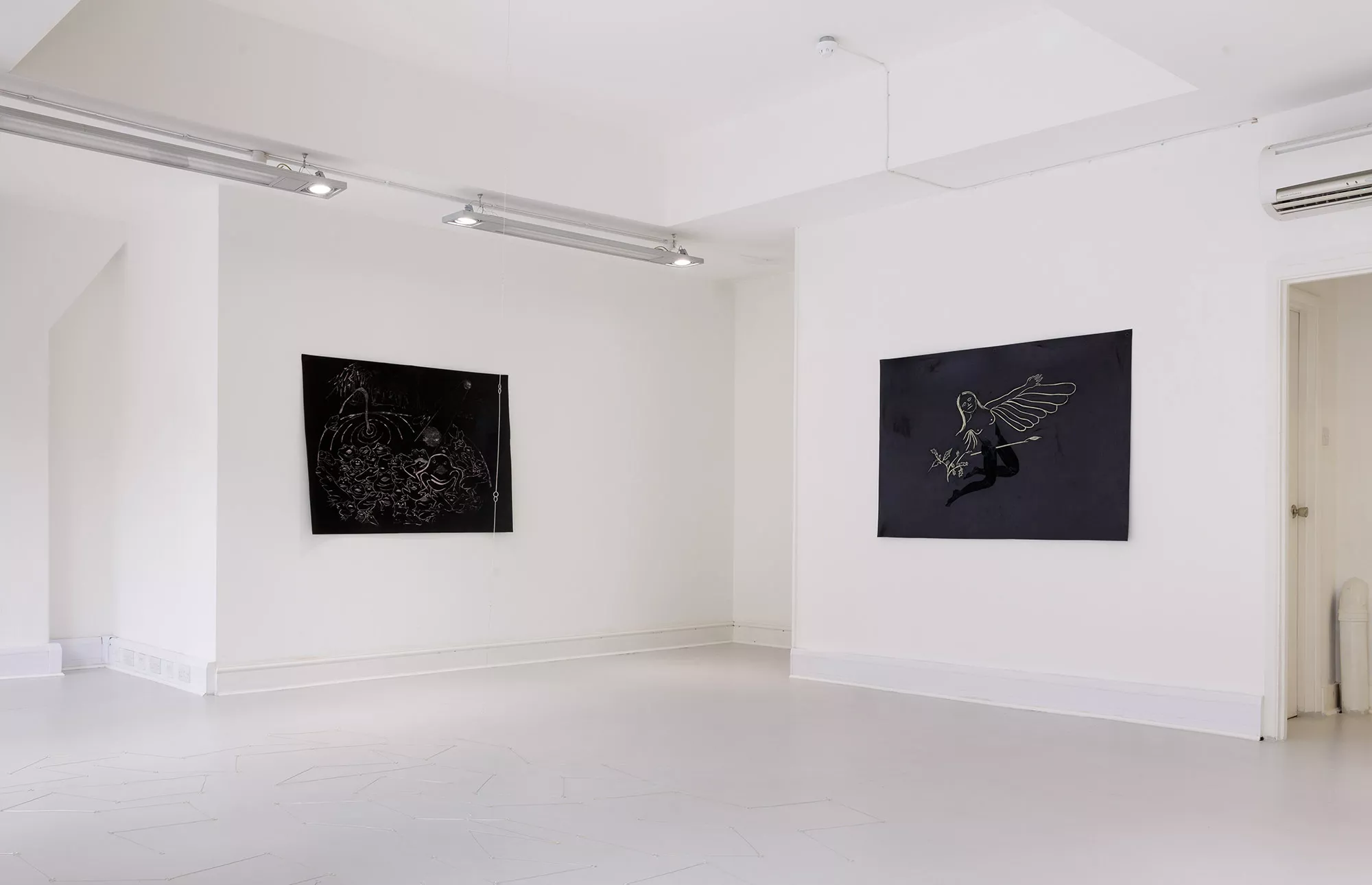
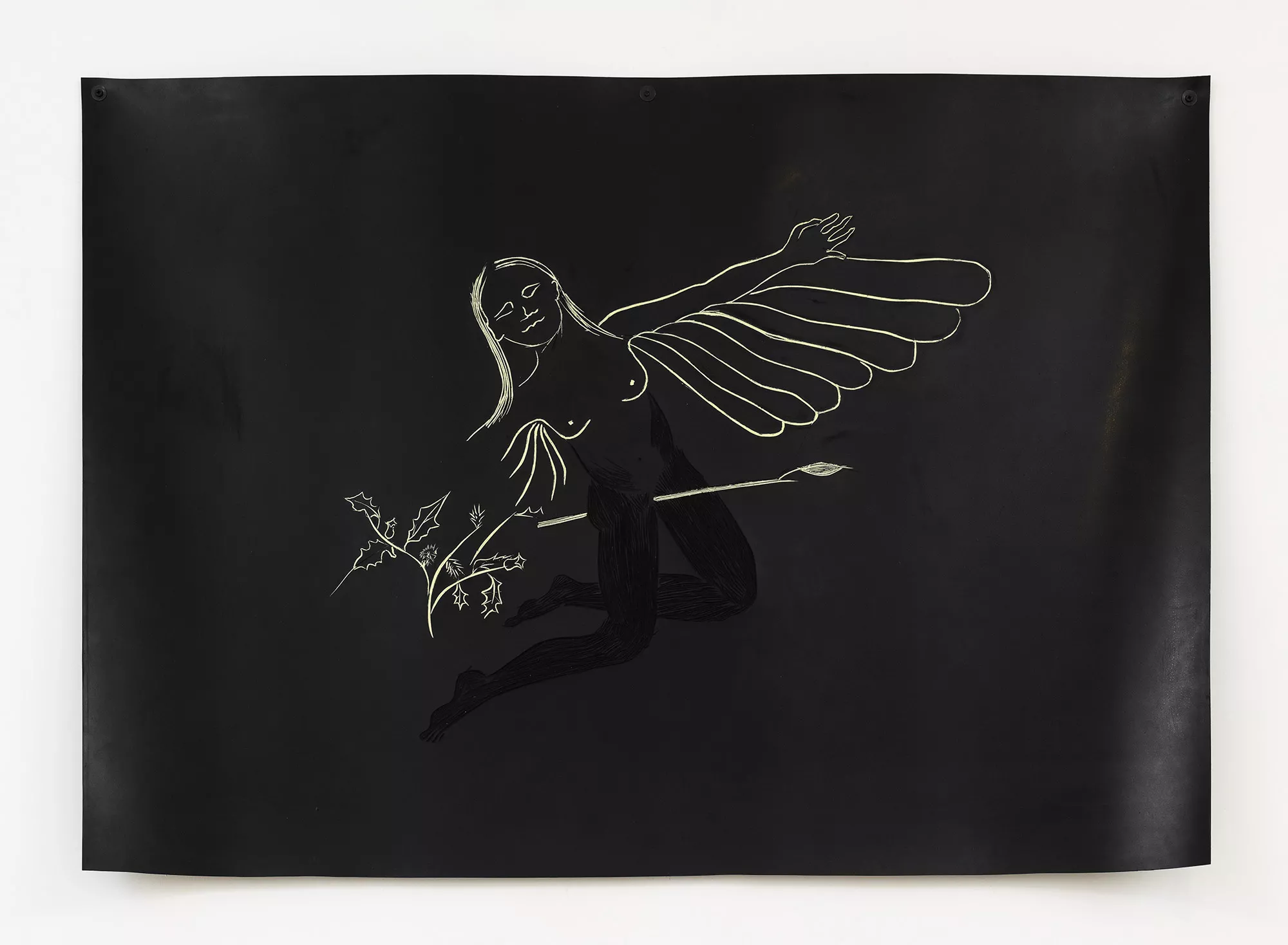
Natural rubber, sulphur, 150 × 100 cm
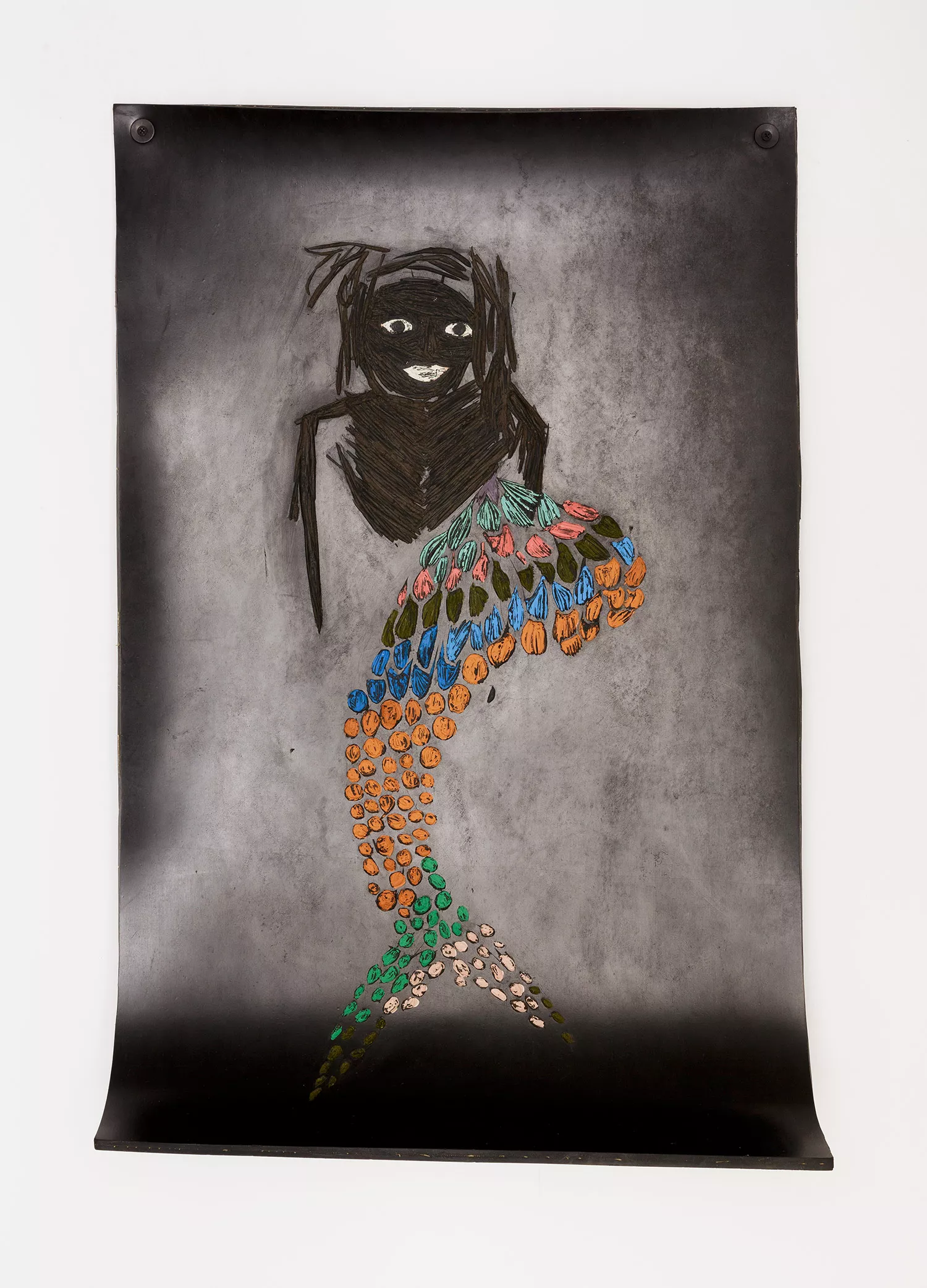
Natural rubber, pigments, acrylic medium, 100 × 70 cm
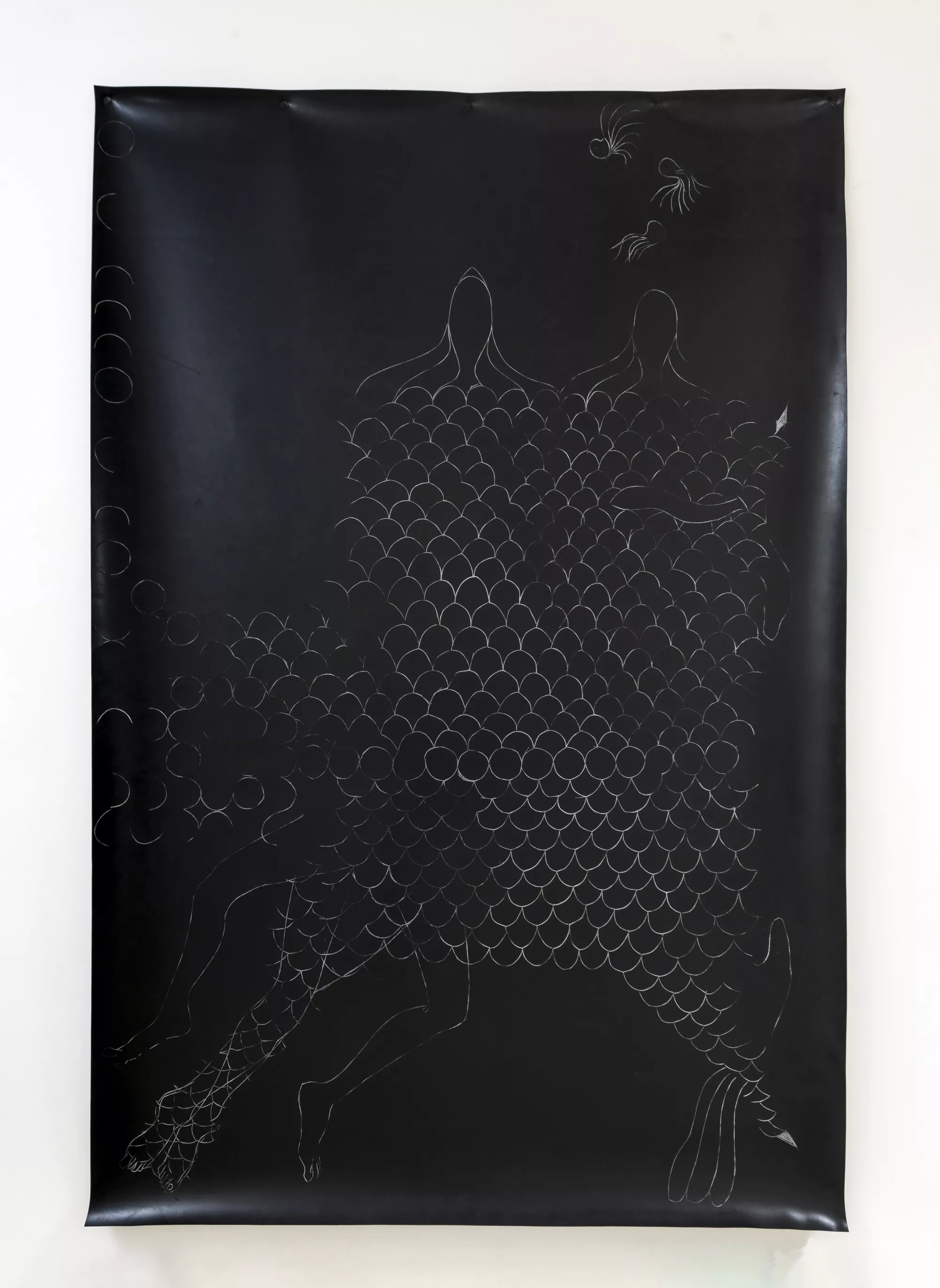
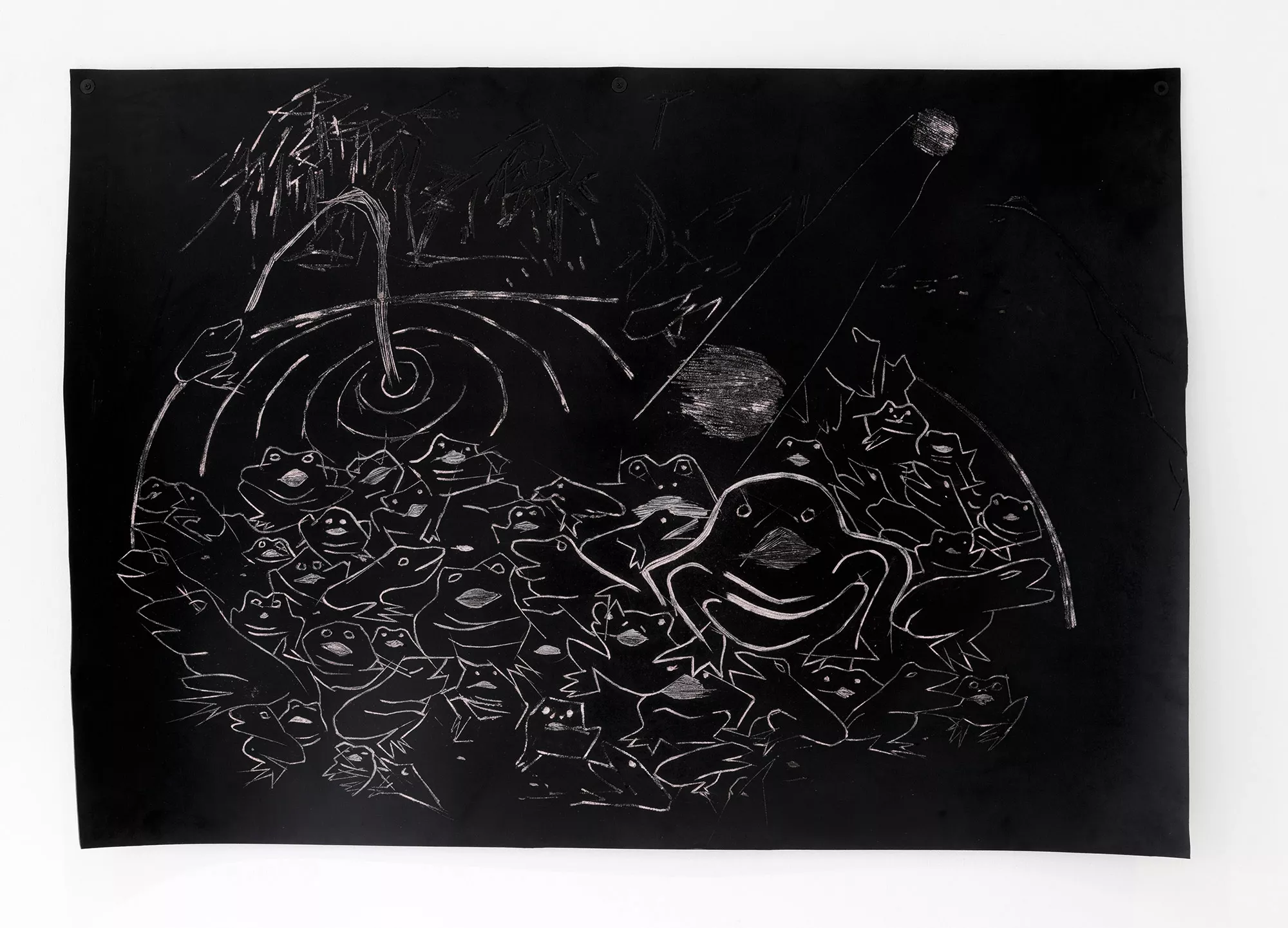
Natural rubber, sulphur, 300 × 200 cm
This series of works on rubber, started in 2016 during a residency at Pivô in San Paulo, explores the uses of plants with psychotropic properties, centring on their ceremonial and healing properties, as well as their applications in a broader context. The artist choose rubber as canvas for its significance in Brazilian history as one of the first products to be exported en mass, helping to lay the foundations of capitalism in the country at the great environmental and anthropological cost of the Amazon rainforest. Two of the works included here, Trinity Panther (2016) and Lake of singing frogs (2016), were produces the day after an Ayahuasca ceremony, further interweaving the thematic elements of the works with the creative process behind them. When Fugazza first encountered ayahuasca, despite having a beautiful experience with it, she was disturbed by the commerce and the spiritual tourism that surrounded it. However, these experiences lead her to question the nature and use of such plants in a broader global context. Since every region in the world has its own indigenous psychotropic plants, she took to studying the psychotropic plants of the Mediterranean, questioning why there are so few of them that remain in use today.
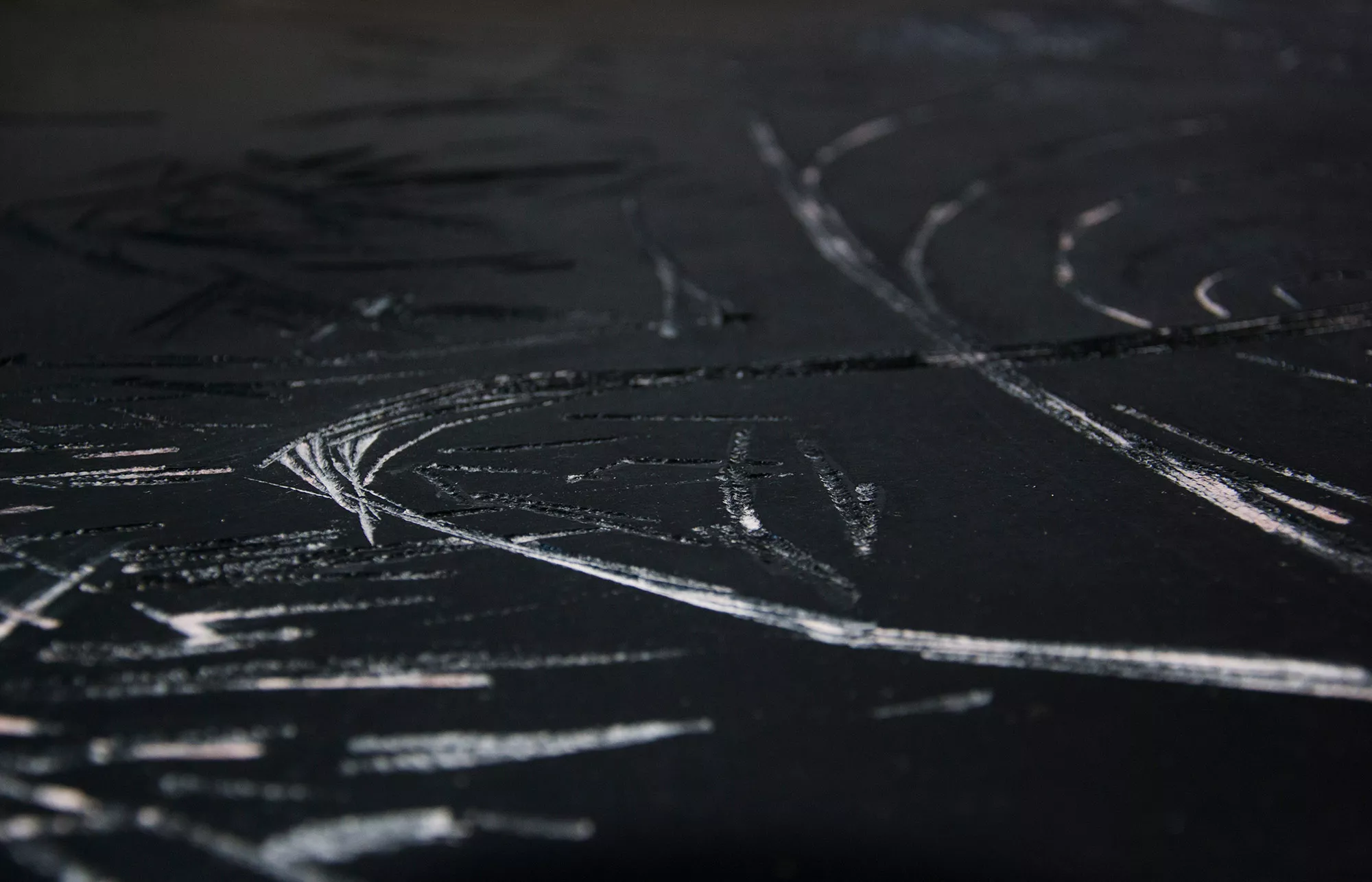
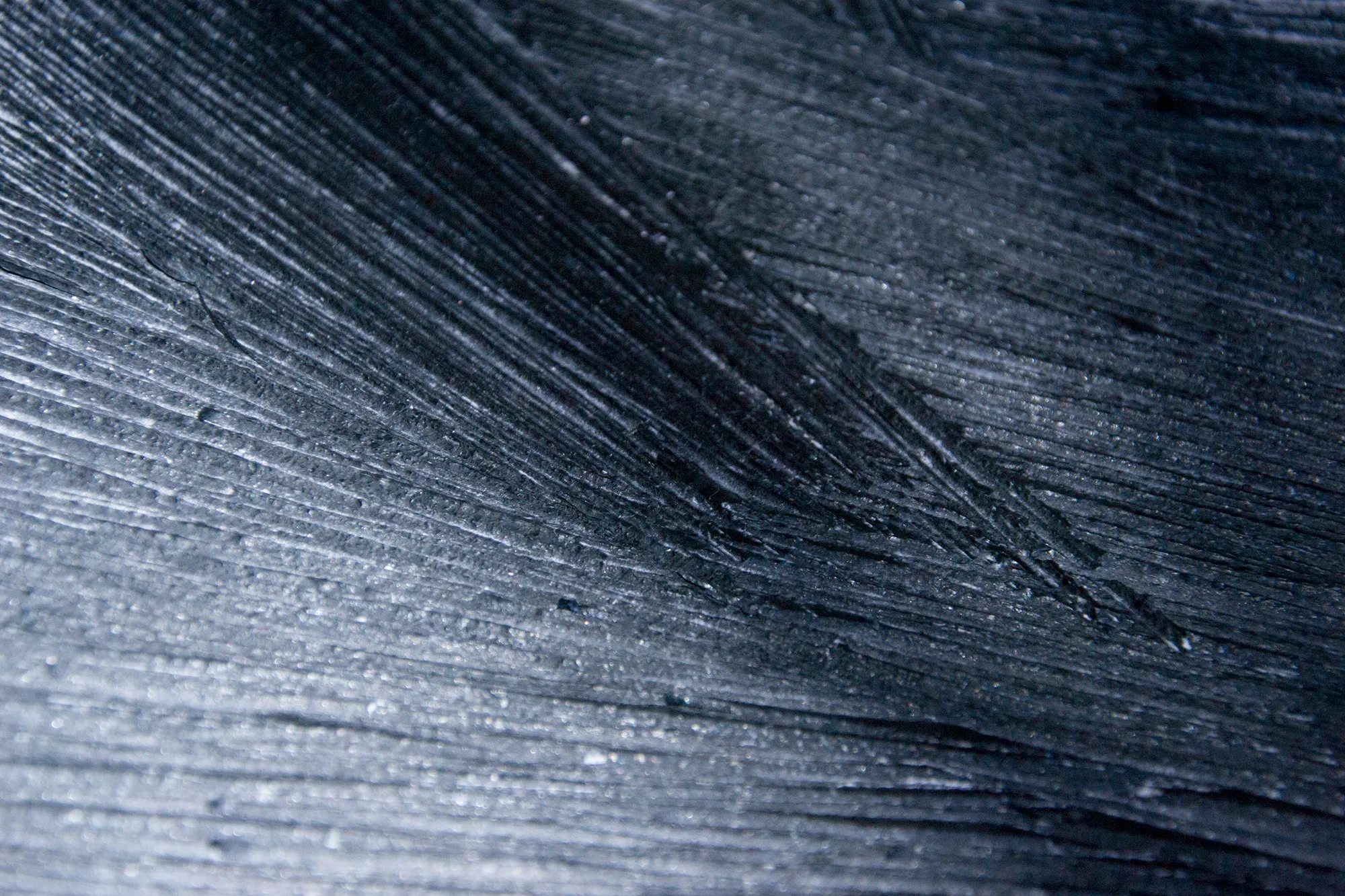
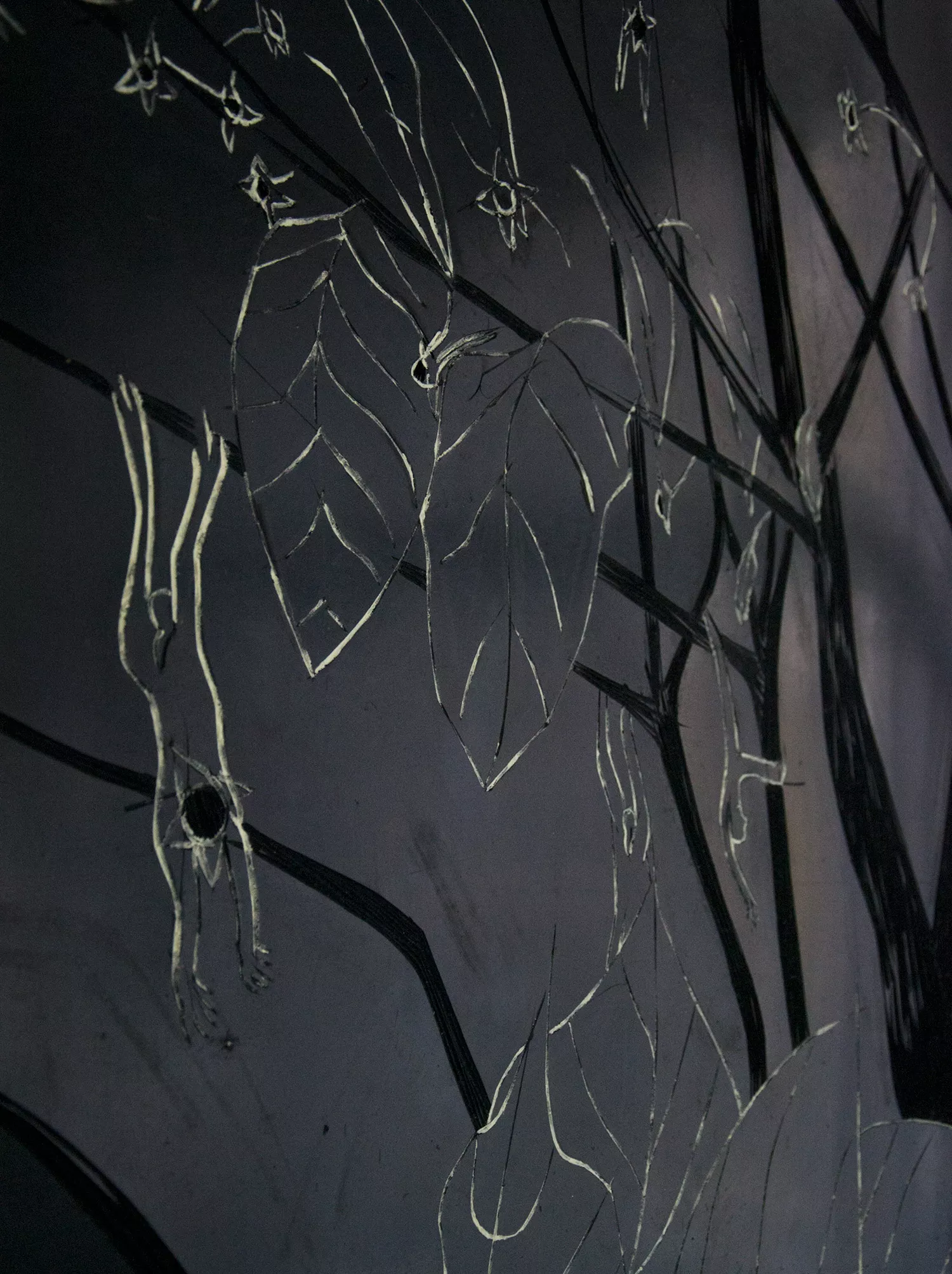
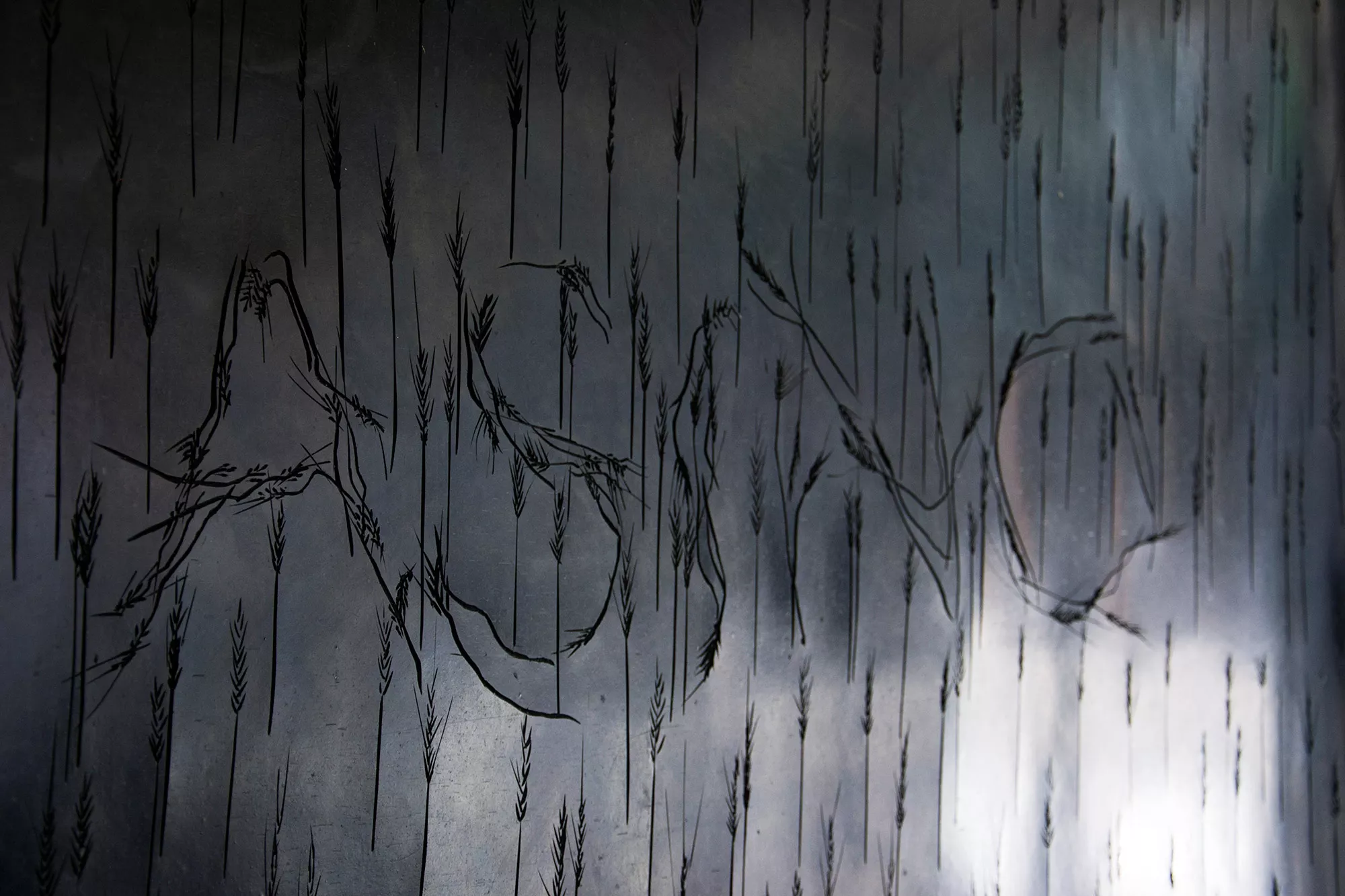
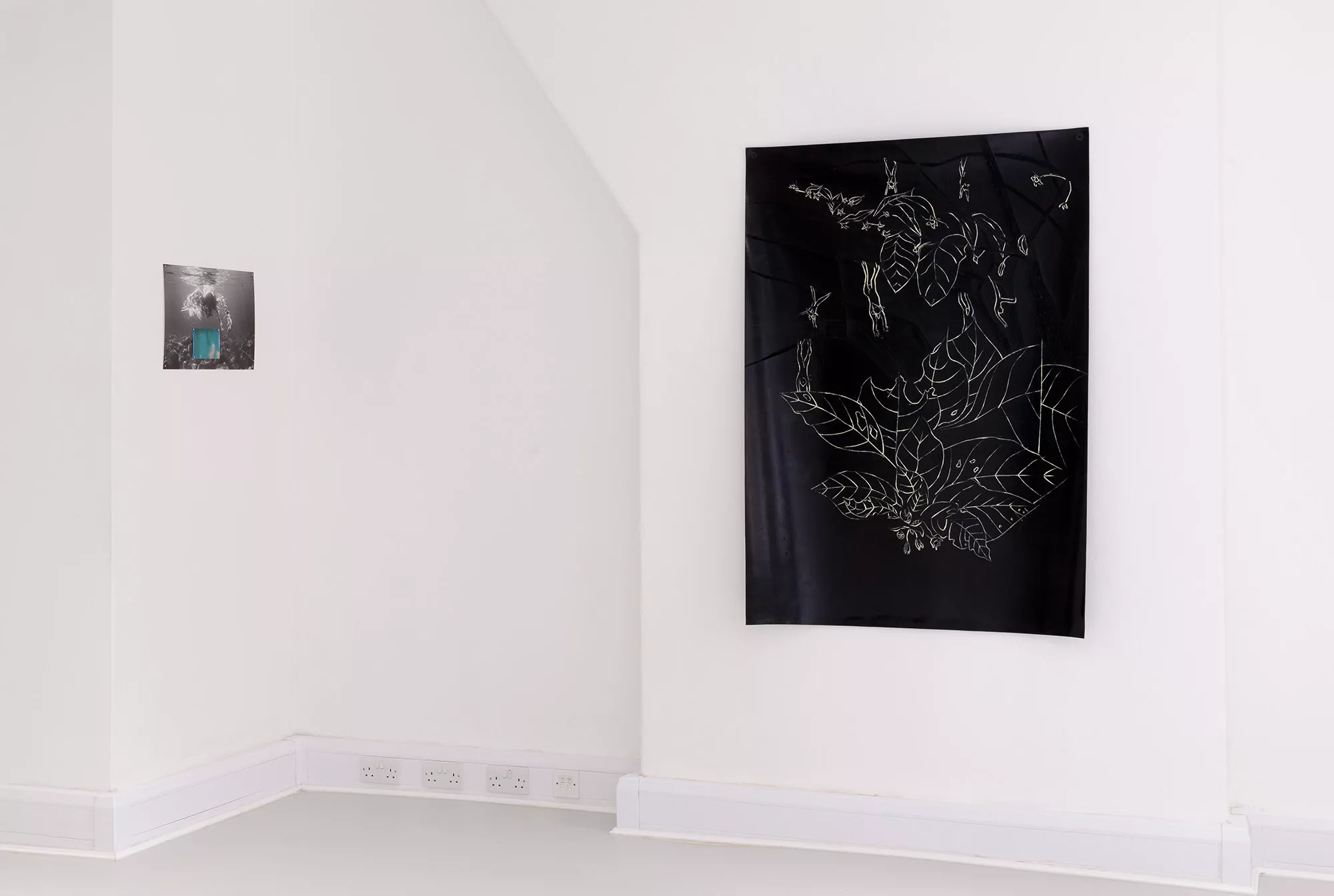
This research informed the remaining works which include botanical renditions of Datura Stramonium and Atropa Belladonna (also known as Deadly Night Shade), which can be found in hallucinogenic ointments known as ‘flying potions’, as well as Ipomea Violacea, whose seeds contain LSA, a molecule similar to LSD. The use of these plants was often linked to traditional, female knowledge and which Christianity, modern medicine and scientific thought have sought to discredit. The urbanisation of Europe and an overarching break from past traditions has wiped out the few remnants of the animist spiritual world which was once present in people’s daily lives. The series draws on the writings of Armanda Guiducci, in particular her 1976 work “La donna non é gente” (Woman are not people), which featured interviews with female experts in herbalism and ritual from Italy’s remote, rural and often poverty stricken communities in the 1970s. Additionally, the works also draw on contemporary environmental chemist Gianluca Toro’s pharmacological interpretation of accounts of witch’s potions and the artist research at the Chelsea Physic Garden and personal experimentations with various psychotropic plants.
Text by Gabriel Ress
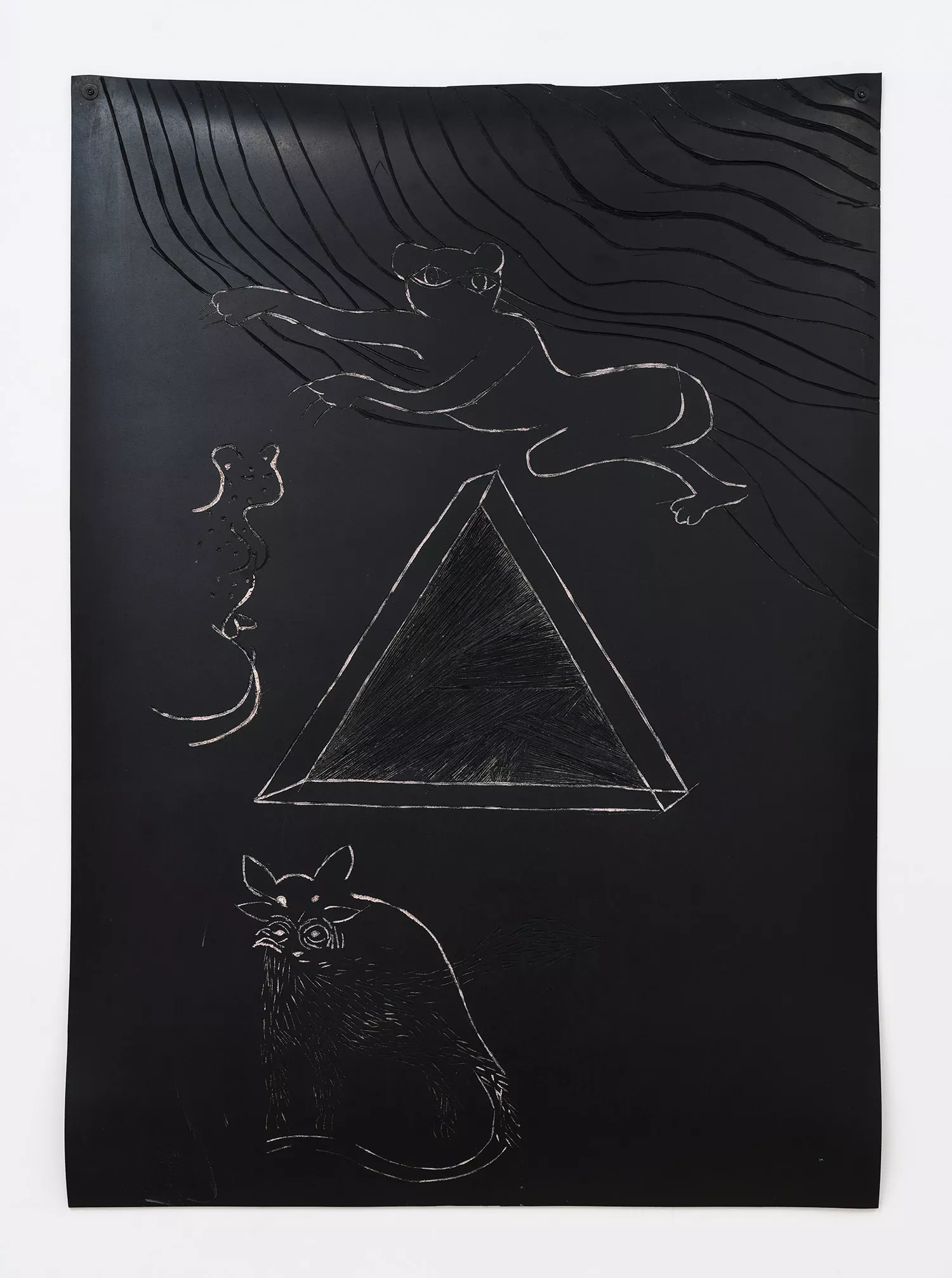
Natural rubber, chalk, 150 × 100 cm
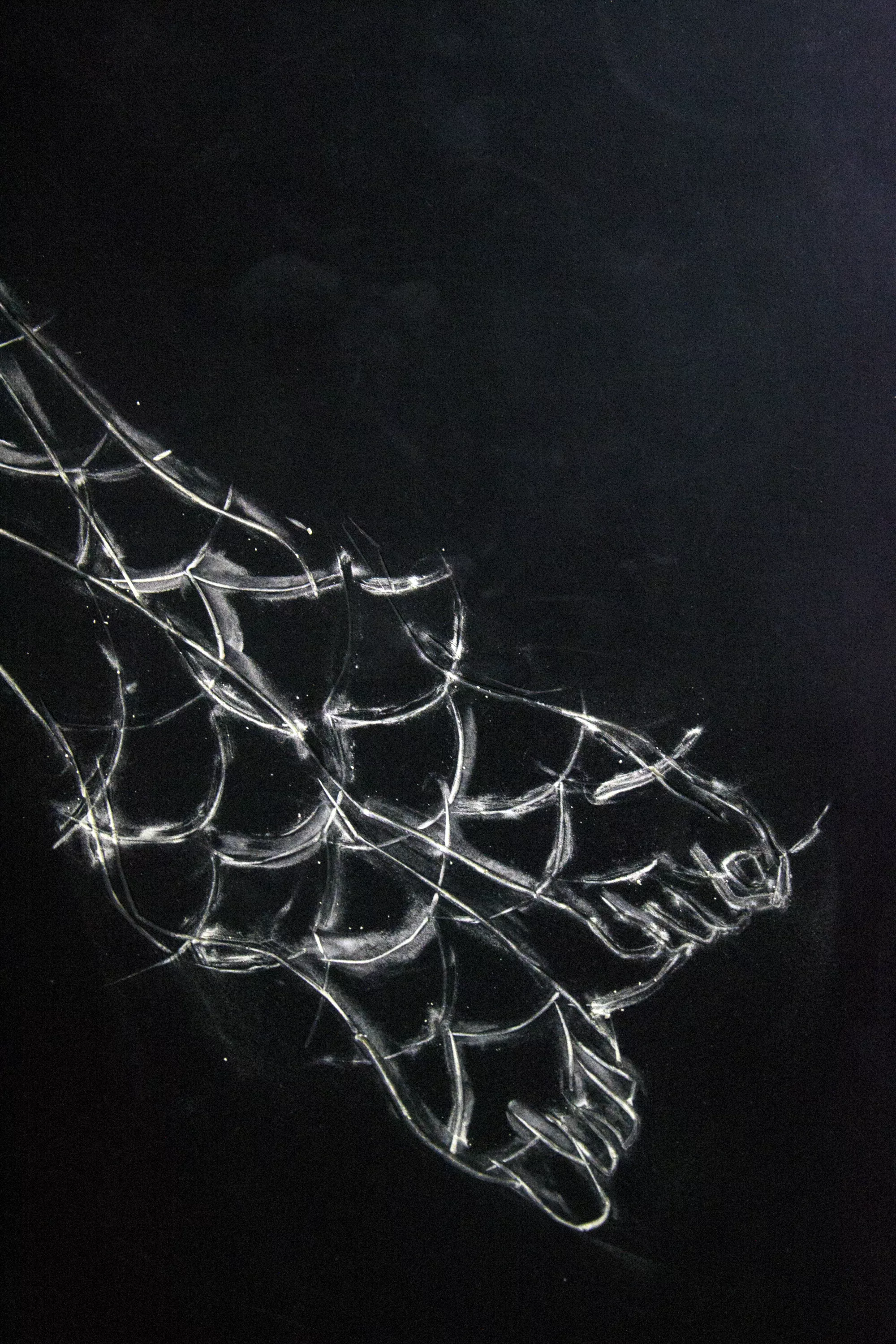
Natural rubber, sulphur, 300 × 200 cm
Photo by Tim Bowditch and Gaia Fugazza’studio